
25 November 2026
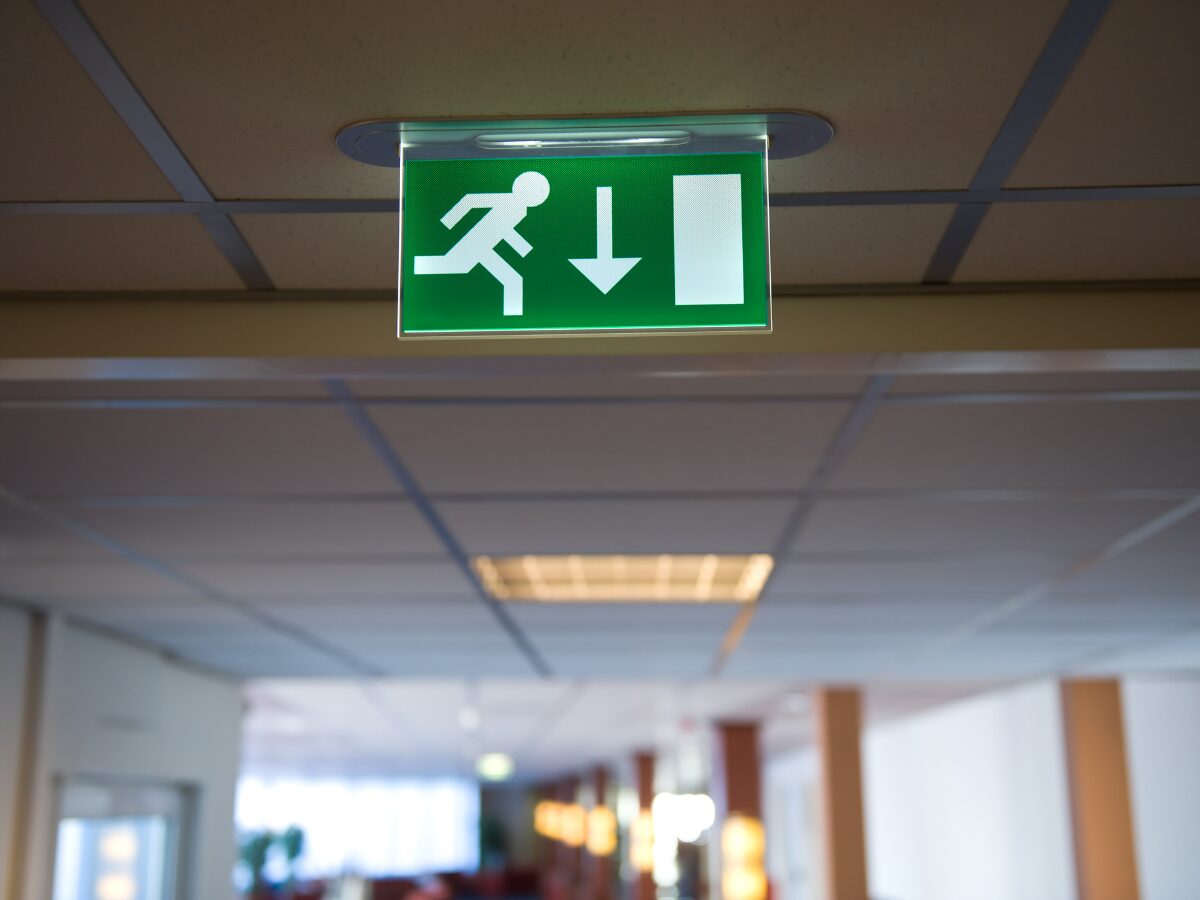
Emergency lighting is an important safety feature in commercial buildings, helping people find their way to safety if the normal lighting fails. However, simply having emergency lights installed isn’t enough. Businesses also need to make sure the system is working properly and can operate when it’s needed.
Regular emergency lighting testing helps identify faulty fittings, battery problems and other issues that could affect the system during a power failure.
For business owners, landlords and facilities managers, understanding the testing requirements is an important part of keeping commercial premises safe and meeting fire safety responsibilities.
Emergency lighting is designed to provide illumination when the normal lighting supply fails. Depending on the building, this may include lighting along escape routes, at exits and in other areas where people need to move safely during an emergency.
In England and Wales, the Regulatory Reform (Fire Safety) Order 2005 places duties on the responsible person to provide and maintain appropriate fire safety measures. Where emergency lighting is necessary for safe evacuation, it needs to be maintained in an effective working condition.
BS 5266-1 provides guidance on emergency lighting systems, including their maintenance and testing. BS EN 50172 also addresses emergency escape lighting systems and their ongoing inspection and testing.
These standards help businesses understand good practice, although it’s important to distinguish guidance in British Standards from the legal duties that apply to individual premises.
The emergency lighting arrangements required for a building should be based on its fire risk assessment, layout, occupancy and use.
For businesses needing professional support, Procure Direct provides commercial emergency lighting installation, testing and maintenance across a range of commercial and industrial properties.
Emergency lighting systems need regular checks to confirm they will operate if the normal power supply fails.
For typical battery-backed emergency escape lighting systems, the commonly recommended testing schedule includes monthly functional tests and an annual full-duration test.
Monthly testing involves briefly simulating a failure of the normal lighting supply to check that the emergency lights operate correctly.
During the test, the person carrying out the check should confirm that the relevant fittings illuminate and look for obvious signs of damage or malfunction.
The test should be long enough to check that the lights operate, without unnecessarily discharging their batteries.
Any faults should be recorded and arrangements made for them to be investigated.
Monthly checks are generally straightforward, but the person carrying them out should understand the system and be able to perform the test safely.
An annual test is more thorough because it checks whether the emergency lighting system can operate for its required duration.
For many commercial installations, this involves a three-hour test, although the required duration depends on the system’s design and the needs of the premises.
During the test, the normal supply is simulated as having failed and the emergency lighting is checked over its rated operating period.
This helps identify problems that might not be apparent during a short monthly check, particularly batteries that can initially power a light but cannot maintain it for the required duration.
Annual testing should be planned carefully because batteries need time to recharge afterwards. Businesses may need temporary safety arrangements while the system’s emergency capacity is reduced.
| Test | Typical frequency | Purpose |
| Functional test | Monthly | Check that emergency lights operate when the normal supply is interrupted |
| Full-duration test | Annually | Check that the system operates for its required emergency duration |
| Additional inspection or testing | As needed | Check faults, repairs, alterations or concerns identified during routine checks |
The appropriate arrangements should always reflect the system installed, relevant standards and the building’s fire risk assessment.
The exact process depends on the type of emergency lighting system and the testing equipment installed.
Some buildings have manual test switches, while others use automatic testing systems that can carry out checks and record results.
A typical emergency lighting test may involve:
Automatic testing can make routine checks easier to manage, particularly in larger buildings. However, it doesn’t remove the need to maintain the system or investigate faults.
Testing should also be carried out in a way that avoids creating unnecessary risks for people using the building.
An example of this work can be seen in Procure Direct’s emergency lighting testing and maintenance project at Healing Secondary School, where testing, repairs and certification were completed during the school holidays to minimise disruption.
Responsibility depends on who has control of the premises and the relevant fire safety arrangements.
Under the Regulatory Reform (Fire Safety) Order 2005, the responsible person is generally the employer in relation to a workplace, or another person with control of the premises to the extent of that control.
In practice, this may involve business owners, employers, landlords, managing agents or facilities management teams.
In multi-occupied buildings, responsibilities may be shared between different parties. For example, a landlord may manage emergency lighting in communal areas while individual businesses have responsibilities within their own premises.
The important thing is that testing and maintenance arrangements are clearly established, rather than assuming another party is dealing with them.
A failed test may indicate a problem with a battery, lamp, fitting, charging circuit or another part of the emergency lighting system.
Any failure should be recorded and assessed promptly, particularly where it affects an escape route or another area needed for safe evacuation.
The appropriate response will depend on the fault and the risk it creates. This may involve arranging repairs, replacing faulty components or introducing temporary safety measures until the system is restored.
Businesses shouldn’t leave failed emergency lighting unattended until the next scheduled inspection.
If a fault could affect safe evacuation, the responsible person should review the fire safety arrangements and seek competent advice on the precautions needed.
Testing confirms whether the system operates during a check, while maintenance helps keep it in a suitable condition between tests.
Emergency lighting batteries and other components can deteriorate over time, even where fittings appear to be working normally.
Regular maintenance can help identify developing problems, replace worn components and keep the system reliable.
It can also help facilities managers plan repairs and replacements rather than dealing with multiple unexpected failures.
Emergency lighting should therefore be considered as part of a building’s wider commercial electrical maintenance and fire safety arrangements, rather than something that only needs attention during an annual inspection.
Maintaining clear records makes it easier to demonstrate that emergency lighting is being checked and that identified faults are being addressed.
A record should normally include the date of the test, the checks carried out, the results, any defects identified and the action taken.
Records can also help identify recurring problems, such as fittings that repeatedly fail or batteries that need replacing.
For businesses managing multiple properties, keeping this information organised makes it easier to plan maintenance and track outstanding work across different sites.
Businesses have legal duties to maintain appropriate fire safety measures, including emergency lighting where it is needed.
The Regulatory Reform (Fire Safety) Order 2005 requires relevant fire safety equipment and systems to be maintained in an efficient state, effective working order and good repair.
Regular testing is an important way of checking that emergency lighting remains operational. The testing arrangements should reflect the applicable standards, system design and fire risk assessment.
Monthly functional testing is the commonly recommended approach for emergency escape lighting systems.
These checks help confirm that emergency lights operate when the normal lighting supply fails.
Businesses should follow the appropriate testing arrangements for their particular system, including any automatic testing procedures.
Not necessarily. The required operating duration depends on the emergency lighting system’s design and the needs of the premises.
Many commercial systems are designed for three hours, but this shouldn’t be assumed for every installation.
The annual full-duration test should check that the system meets its specified operating duration.
Routine functional checks may be carried out by someone who has been appropriately instructed and can perform them safely.
More involved inspections, fault finding, repairs and testing may require a competent electrical professional.
Businesses should make sure whoever carries out the work has the knowledge and ability needed for the particular system and task.
Battery life varies depending on the type of battery, the fitting, operating conditions and the manufacturer’s recommendations.
A battery may still operate during a short functional test but fail to provide the required illumination during a full-duration test.
Regular testing helps identify batteries that are no longer performing as intended.
Emergency lighting needs to work when normal lighting fails, so regular testing and maintenance are important parts of managing a commercial building safely.
Whether you manage an office, warehouse, industrial premises or another commercial property, having a clear testing schedule can help identify faults and keep maintenance organised.
Procure Direct provides emergency lighting testing, installation and maintenance services alongside wider commercial electrical support.
If you need help with emergency lighting testing, maintenance or an existing fault, contact Procure Direct to discuss your property’s requirements.